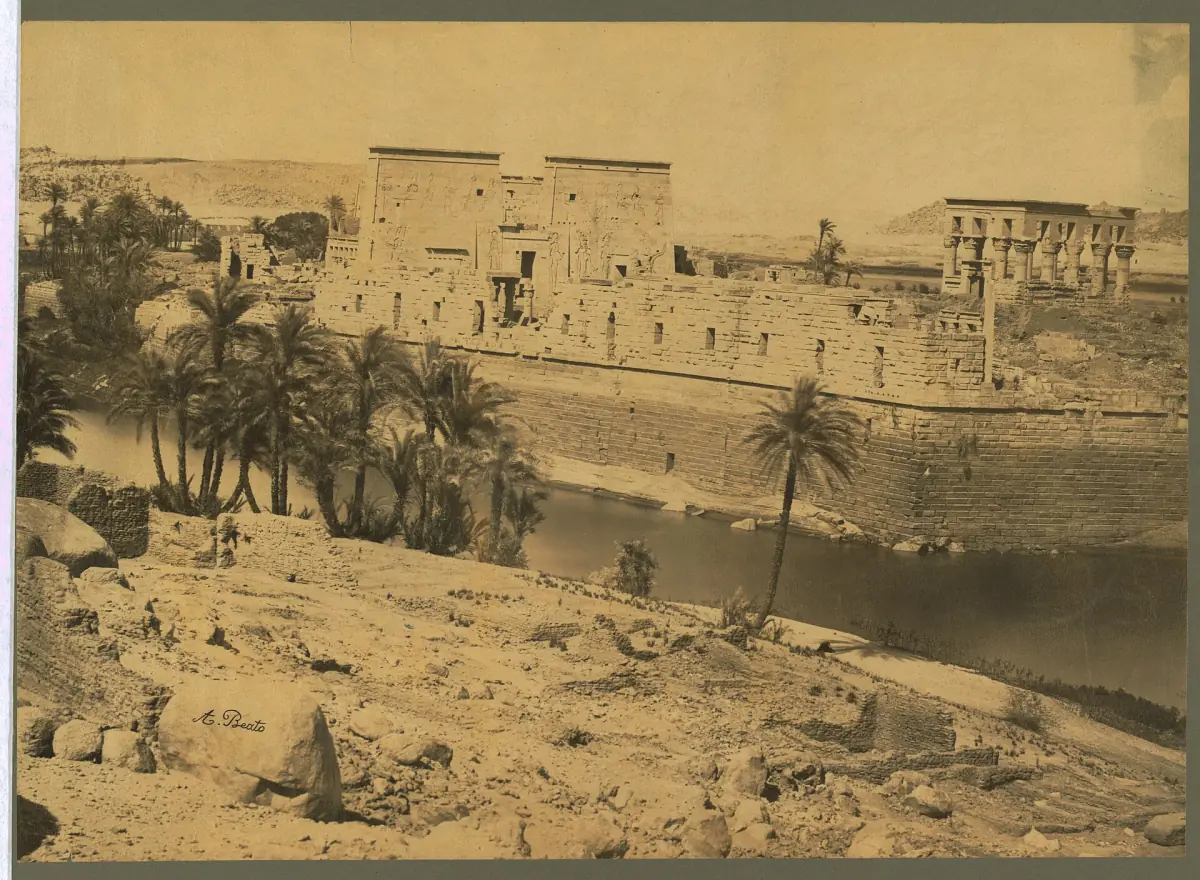
Philae history in brief
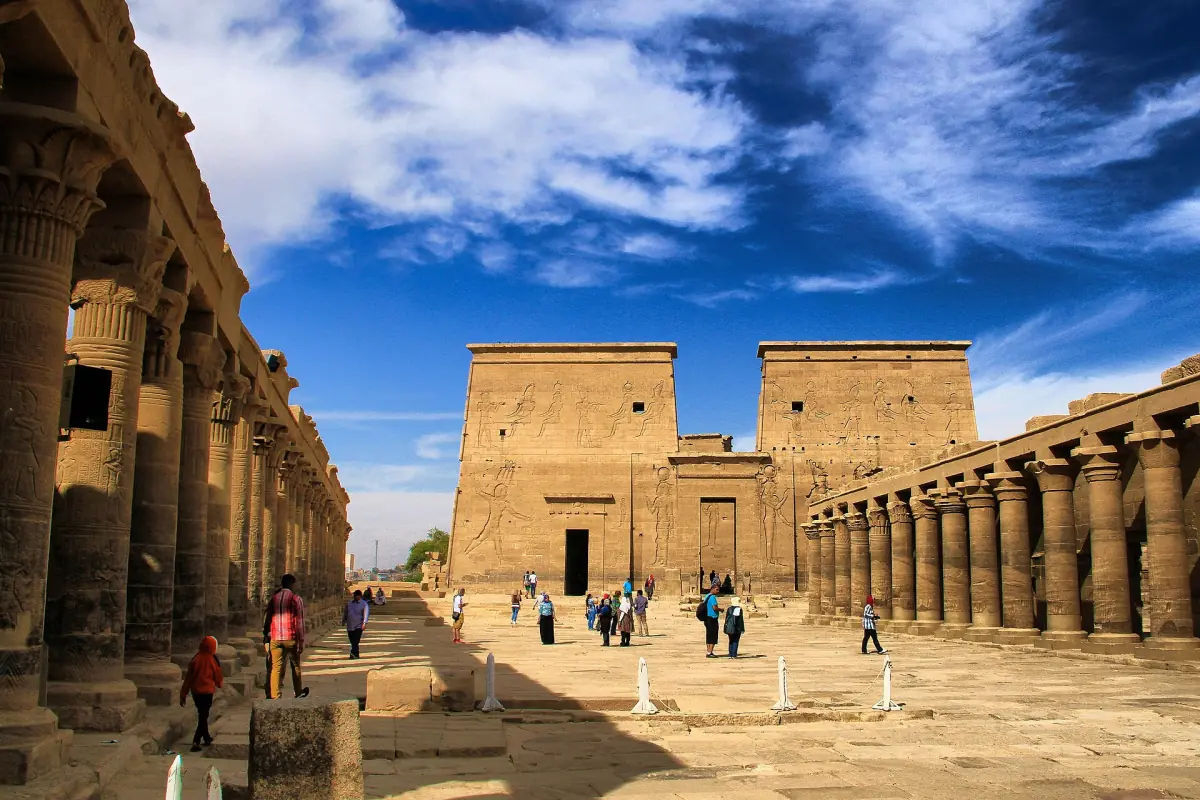
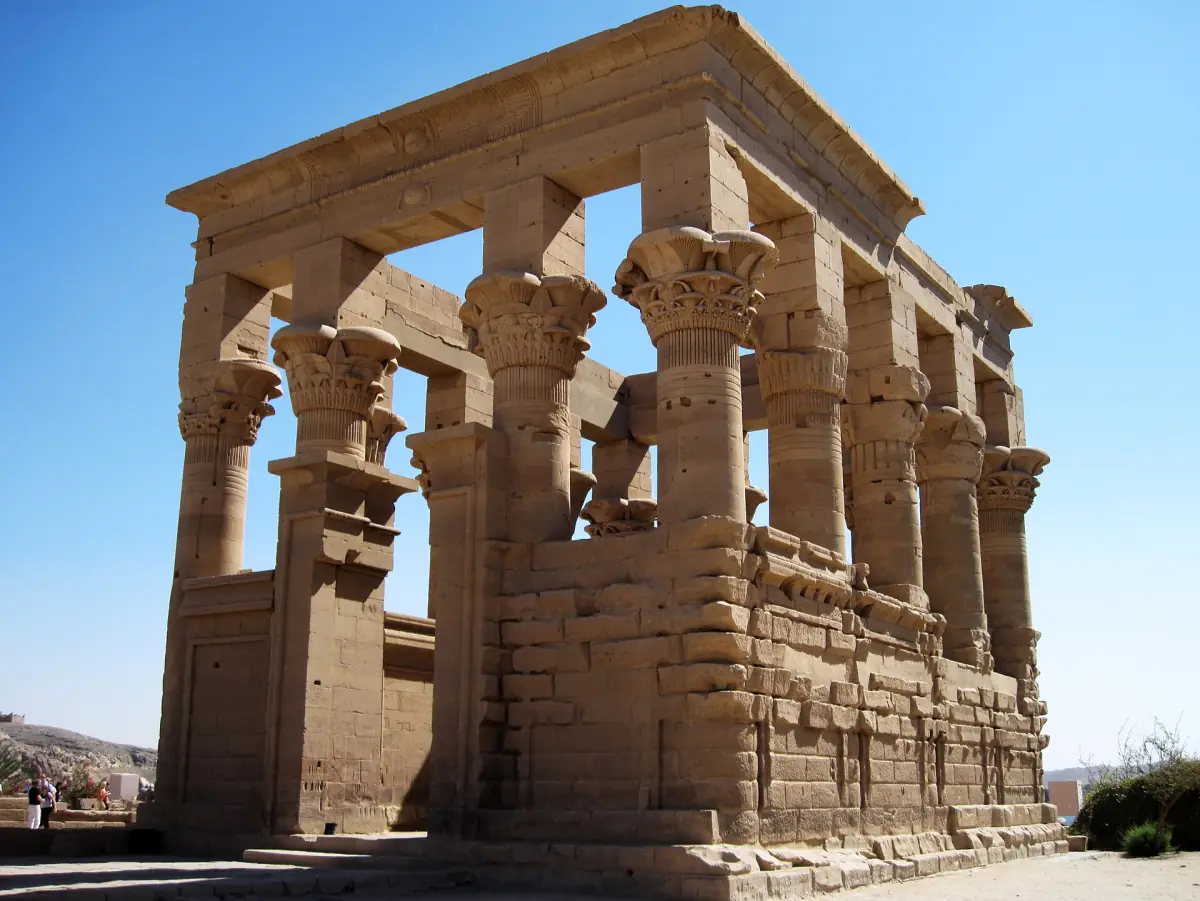
Most of Philae belongs to the Ptolemaic period, with later Roman additions. The complex was not built in one go. The Isis temple was begun under Ptolemy II, the Hathor temple was built under Ptolemy VI and Augustus, and the Roman emperors Trajan and Hadrian are linked to the kiosk and the gate that carry their names.
Two stories have to be kept apart. One is the ancient history of the buildings on the original island. The other is the modern history of how they were rebuilt on Agilkia. When you read about Philae, check which of the two is meant. If you want to see the buildings first, the Philae temple tickets page covers entry and hours.
Philae at a glance: a timeline
From the first kiosk to the move to Agilkia.
| Date | What happened |
|---|---|
| 380–362 BC | Reign of Nectanebo I, whose kiosk is one of the early parts of the complex |
| Ptolemaic period | Building of the Isis temple begins under Ptolemy II. The Imhotep temple is dedicated by Ptolemy V. The Hathor temple follows under Ptolemy VI |
| Augustus | Work on the Hathor temple continues |
| 98–117 AD | Reign of Trajan, whose name the kiosk carries |
| 394 AD | Last dated hieroglyphic inscription |
| 452 AD | Last known dated demotic inscription |
| 527–565 AD | Reign of Justinian, in whose time the temple was closed and later became a church |
| 1902 | Old Aswan Dam finished, linked to the flooding of the island |
| 1972–1980 | Move of the buildings to Agilkia |
| 1979 | Listing as World Heritage |
Our pick: a guided Philae tour
A guide puts the temple's history in context; this four-hour private tour pairs Philae with the High Dam, which is why the temple moved.
Hand-picked tours, booked through GetYourGuide. Prices are indicative starting prices in US dollars (as of October 2026). Tap a tour for live availability and the current price in your currency.
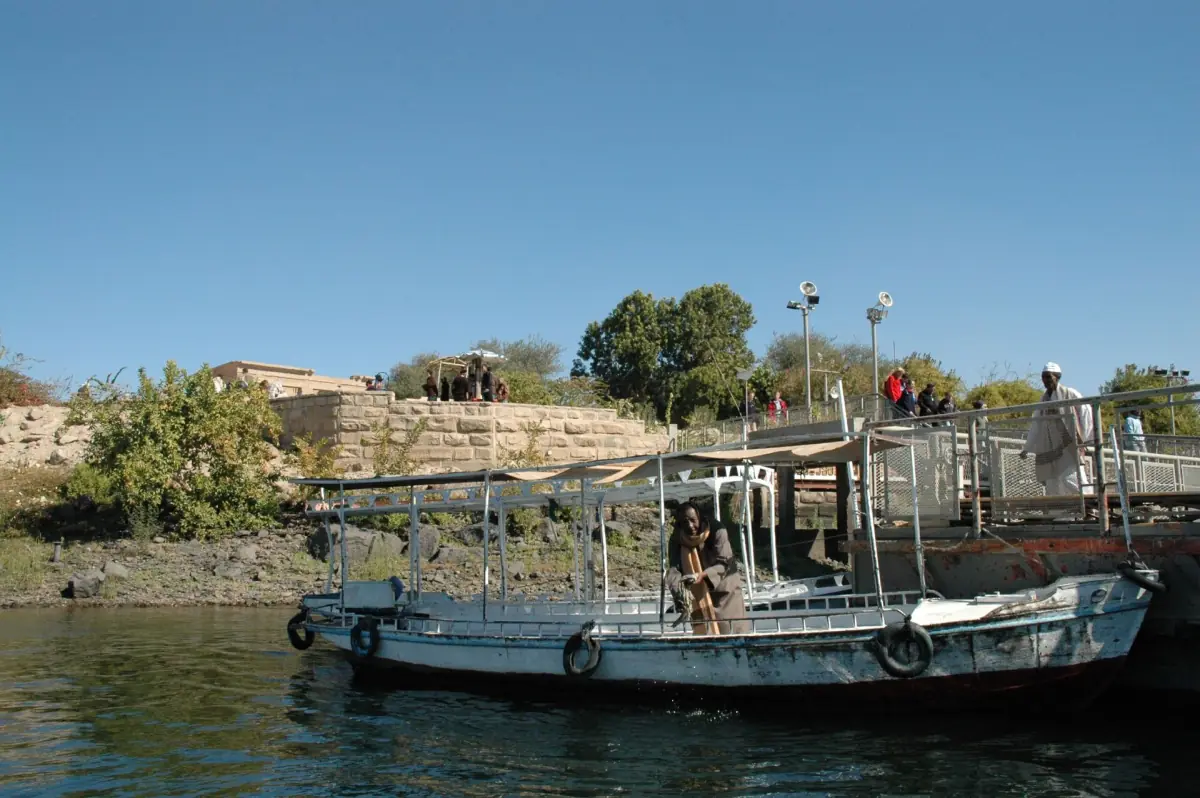
Philae tours from Aswan
Guided trips to the Ptolemaic temples, with live prices and availability.
The Ptolemaic temples
The core of Philae is the work of the Ptolemies. You walk through pylons, courts and colonnades, and see a birth house that celebrates the birth of Horus.
- Isis temple: begun under Ptolemy II, the main sanctuary of the island.
- Imhotep temple: dedicated by Ptolemy V.
- Hathor temple: built under Ptolemy VI and Augustus.
- Kiosk of Nectanebo I: an earlier building from 380–362 BC, so it should not be mixed up with the date of the Isis temple.
For the stories on the walls, read the page on Isis and Osiris.
Roman additions: Trajan and Hadrian
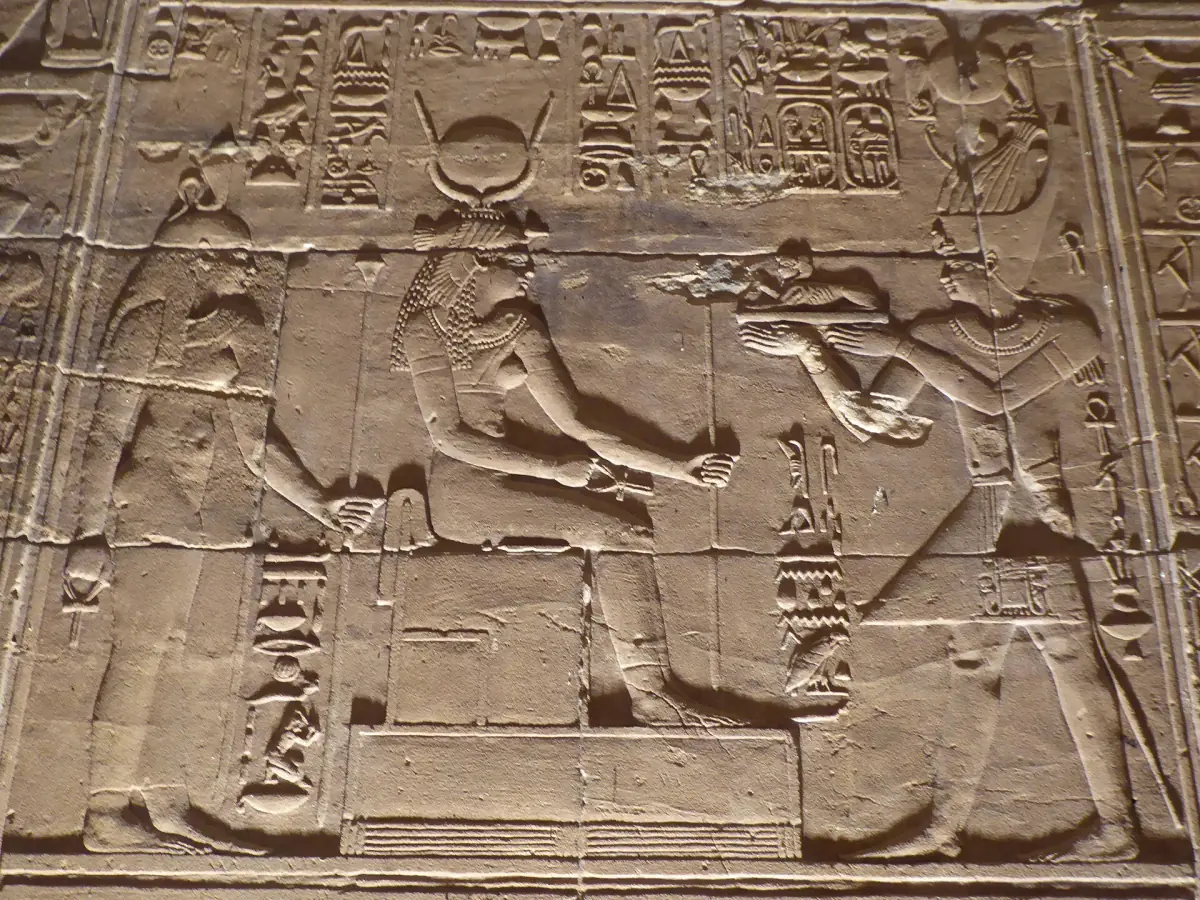
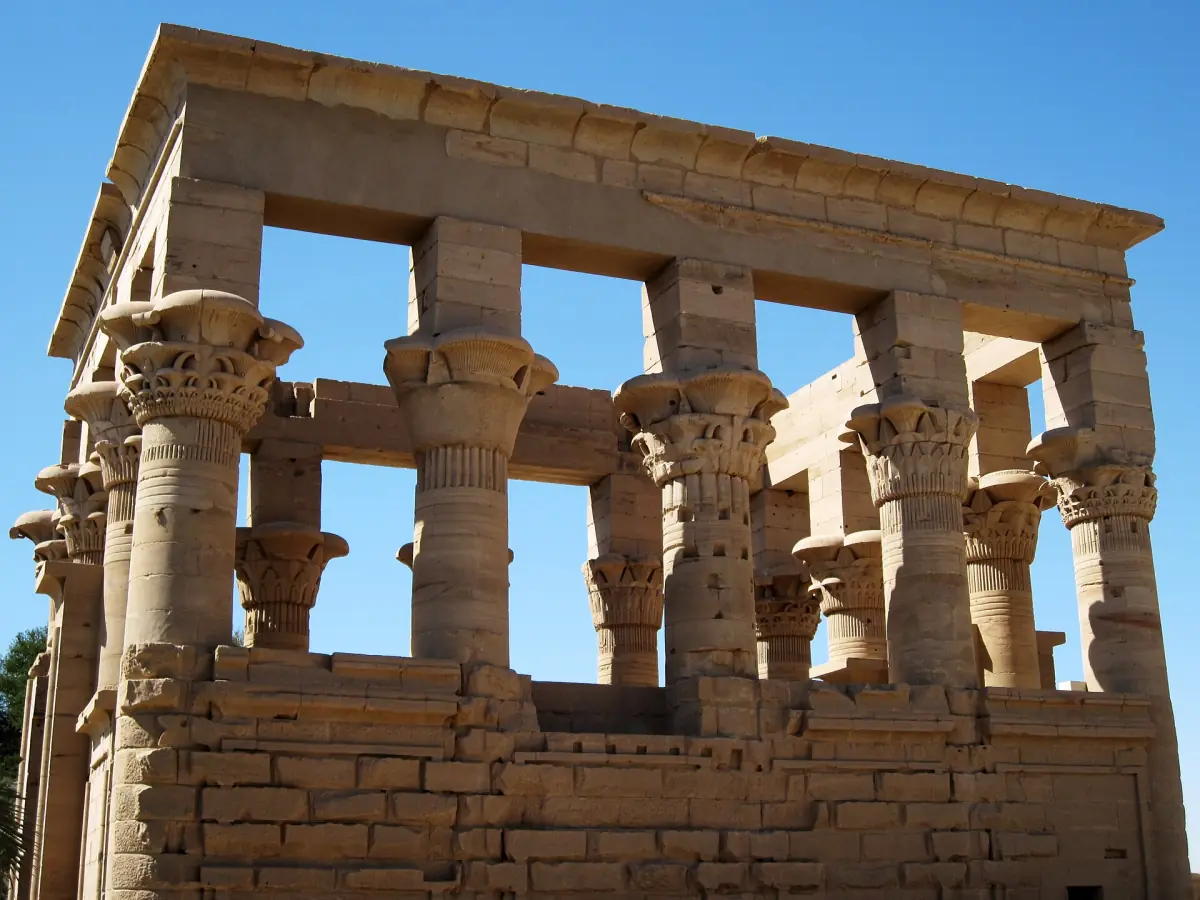
Rome added to Philae. Trajan's Kiosk takes its name from the emperor who ruled from 98 to 117 AD. The name does not prove that the whole building was built in his reign, and older material may be part of it. Hadrian's Gate carries depictions of the Osiris myth, which UNESCO singles out.
The Trajan's Kiosk page explains the pavilion and its nickname in detail.
The last hieroglyphic inscription
A date for the end of an old writing system.
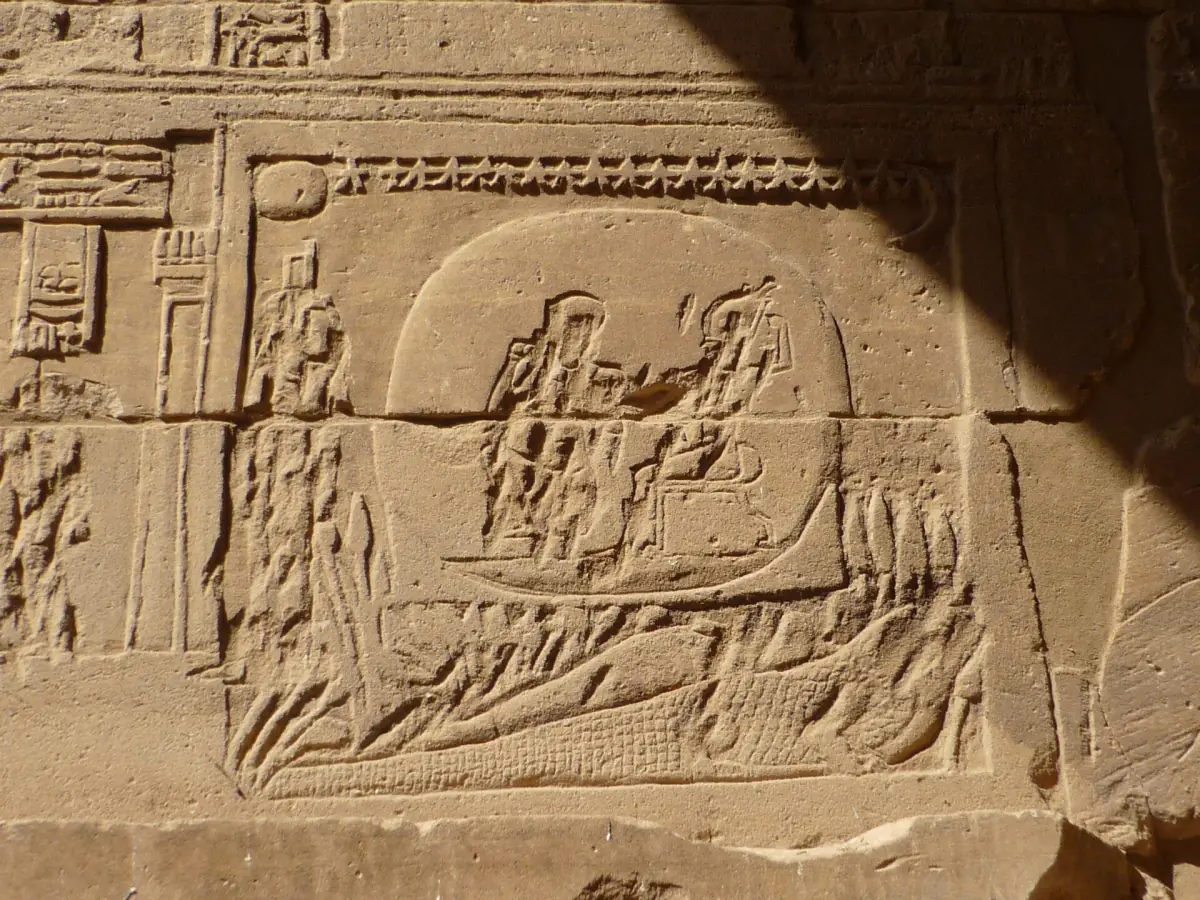
The last dated hieroglyphic inscription at Philae was carved in 394 AD by the priest Esmet-Akhom. Be careful with the wording. It is the last dated hieroglyphic inscription, not the last Egyptian text ever written. Demotic, a different script, continued later. The last known dated demotic inscription at Philae is from 452 AD.
When the cult ended and the church began
From temple to church.
The cult of Isis at Philae lasted for many centuries. Under the emperor Justinian, who ruled from 527 to 565 AD, the temple was closed and later converted into a church. No regular Isis worship takes place at Philae today.
Modern history: dams and rescue
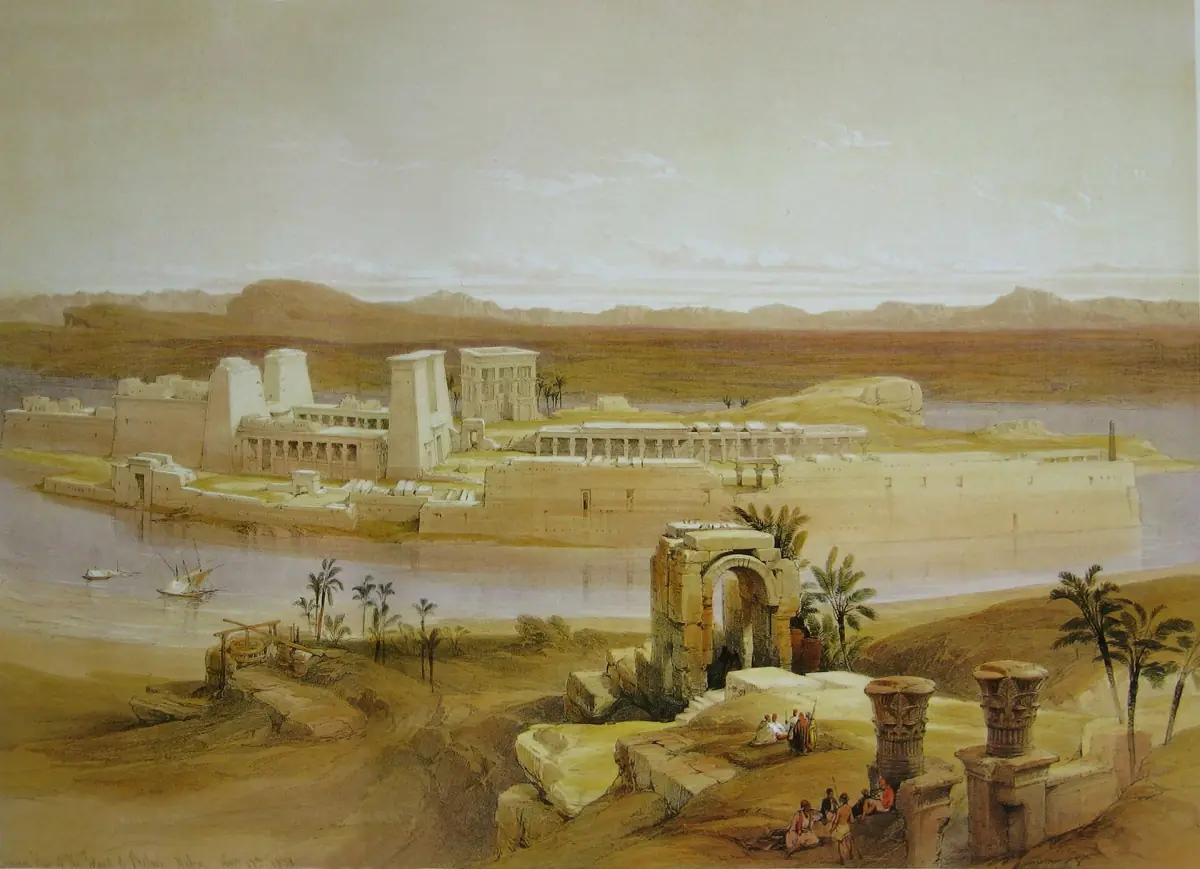
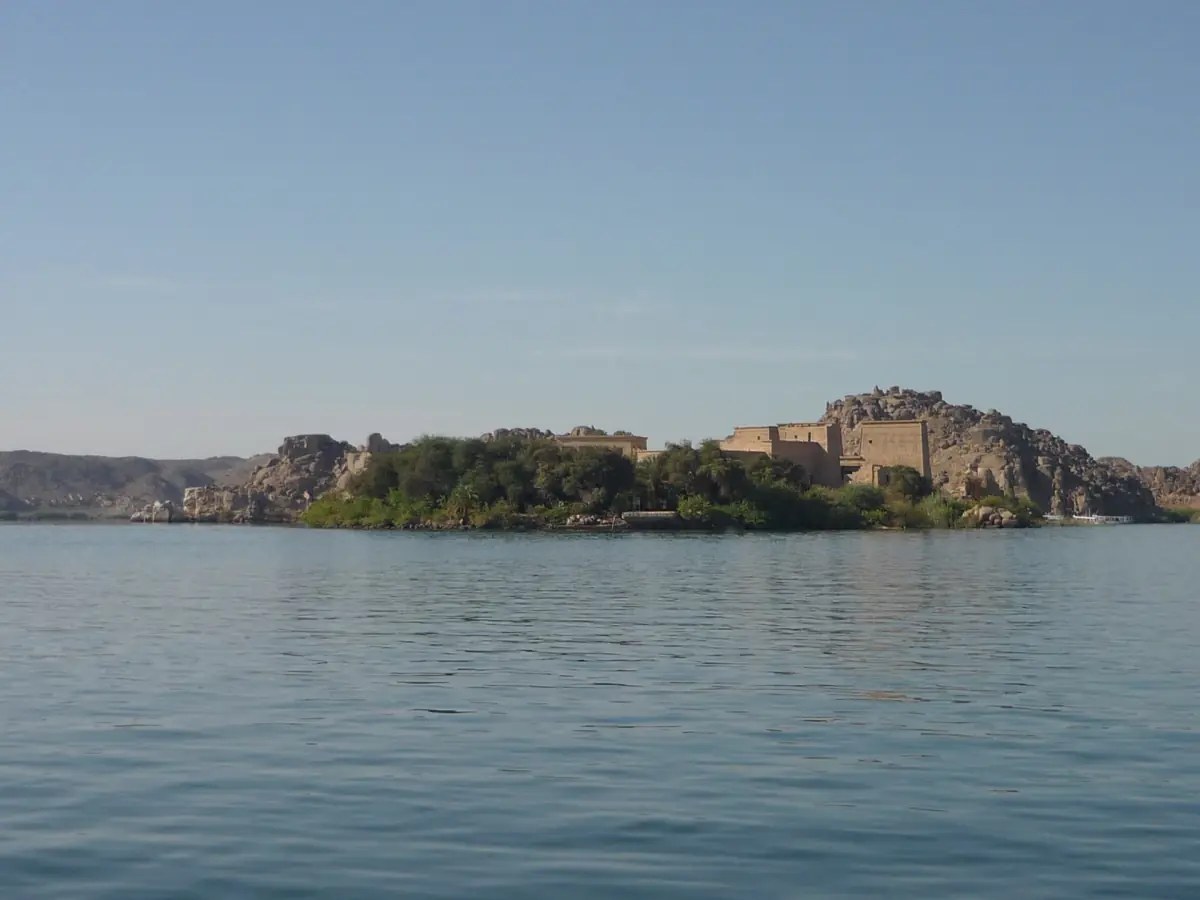
The old Aswan Dam of 1902 is linked to the flooding of the original island. The High Dam of the 1960s followed. The buildings were dismantled and rebuilt on the higher island of Agilkia, within the campaign of 1960 to 1980 to save the monuments of Nubia. The details, with the dates of the move, are on the Agilkia Island page.
For Nubian history beyond Philae, the Nubian Museum in Aswan is the place to go. It opened in 1997. More on the town is on the Aswan page.
Continue your visit
More on Philae.
Philae history: frequently asked questions
Who built the Philae temple?
Mostly the Ptolemaic kings, with Roman additions. The Isis temple was begun under Ptolemy II, and the Hathor temple was built under Ptolemy VI and Augustus.
When was the last hieroglyphic inscription carved at Philae?
The last dated hieroglyphic inscription is from 394 AD, by the priest Esmet-Akhom. It is the last dated one, not the last Egyptian text overall.
When did the cult of Isis end at Philae?
The cult of Isis at Philae lasted for many centuries. Under the emperor Justinian, who ruled from 527 to 565 AD, the temple was closed and later converted into a church.
Is the temple still at its original place?
No. The buildings were moved to Agilkia Island. The original island is flooded.
When did Philae become a World Heritage site?
In 1979, as part of the listing "Nubian Monuments from Abu Simbel to Philae".