
The myth in short
The story of Osiris is a religious narrative, told in several versions. The core is simple. Seth kills Osiris and cuts up his body. Isis and Nephthys put it back together, and with the help of Anubis, Osiris is restored. He fathers Horus and rules the realm of the dead.
Isis is the wife of Osiris and the mother of Horus. She is also the symbolic mother of the pharaoh. That is why so many reliefs show her as a nursing mother with the child on her lap. When you walk through Philae, you are in the house of the goddess who holds this story together.
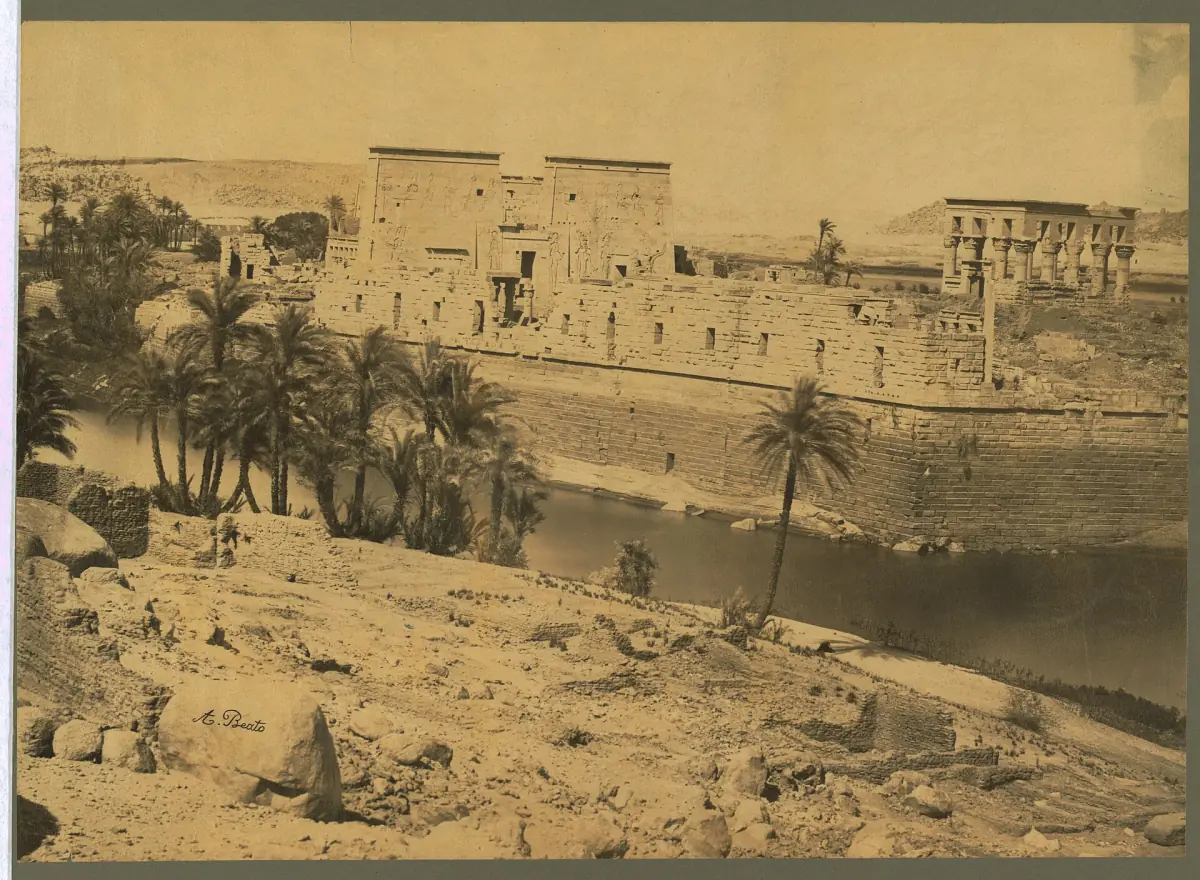
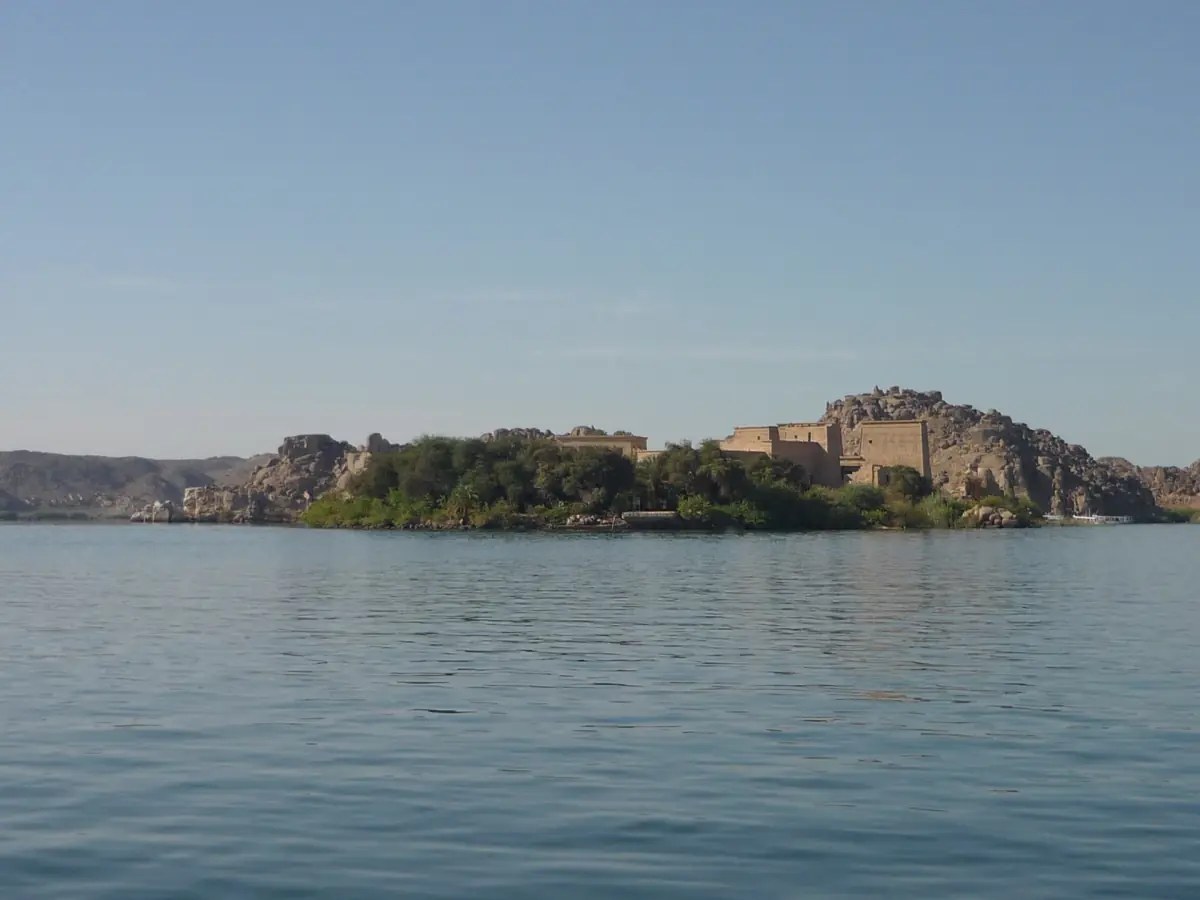
The temple stands on Agilkia island today, but the cult belonged to the original island of Philae. If you want the practical side first, start with the Philae temple tickets page.
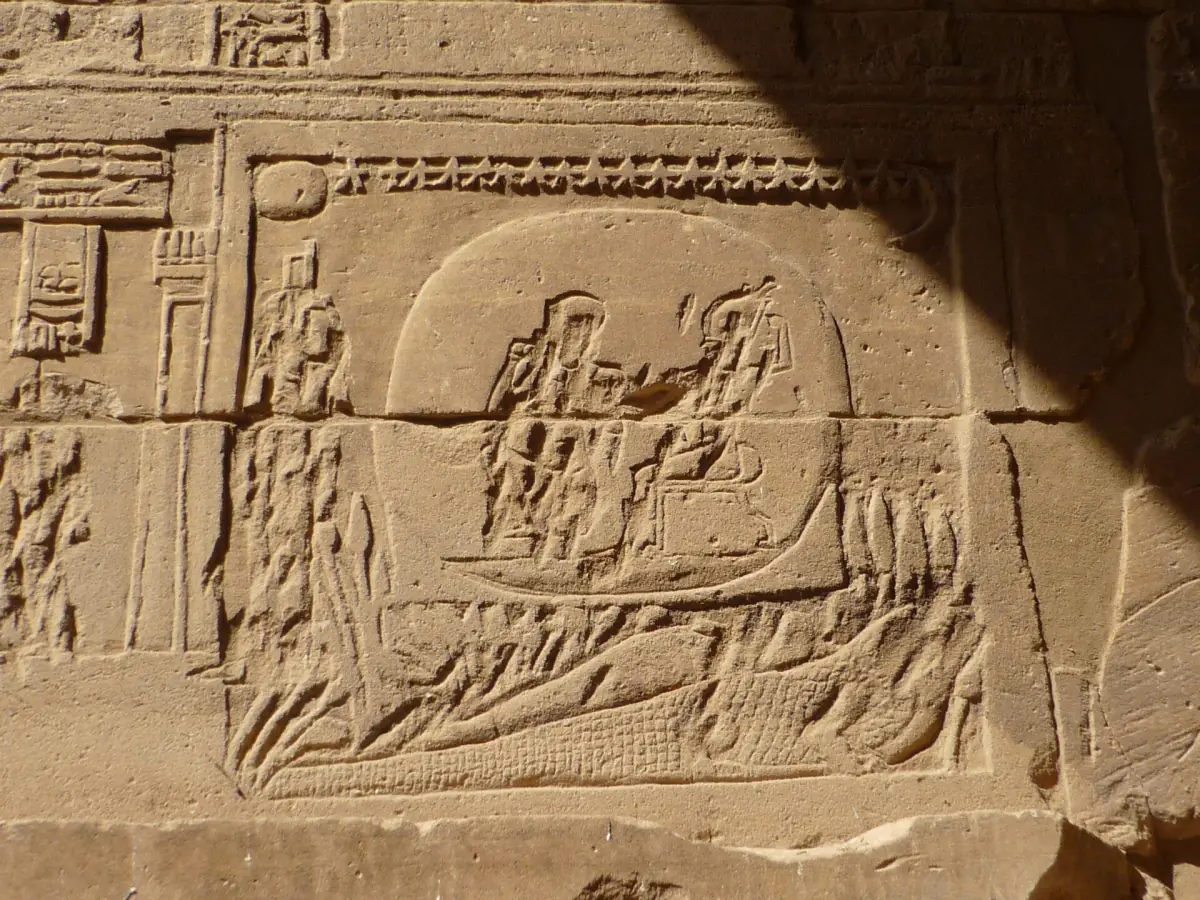
Osiris, Isis and Horus: who is who
Three figures you will meet again and again on the walls.
Osiris
The murdered and restored god. After his restoration he rules the realm of the dead.
Isis
His wife and the mother of Horus. She is often shown as a nursing mother. As the symbolic mother of the pharaoh, she links the god's story to the living king.
Horus
The son of Osiris and Isis. Philae has a birth house, called a mammisi, that celebrates the birth of Horus. You walk past its columns on the way through the island.
Do not expect a single fixed version. The myth was told and shown in different ways, and the reliefs at Philae show scenes, not a continuous book.
Our pick: a guided visit to Philae
A guide helps you read the reliefs of Isis and Osiris on the temple walls; this four-hour tour includes one, plus the entry tickets.
Hand-picked tours, booked through GetYourGuide. Prices are indicative starting prices in US dollars (as of October 2026). Tap a tour for live availability and the current price in your currency.
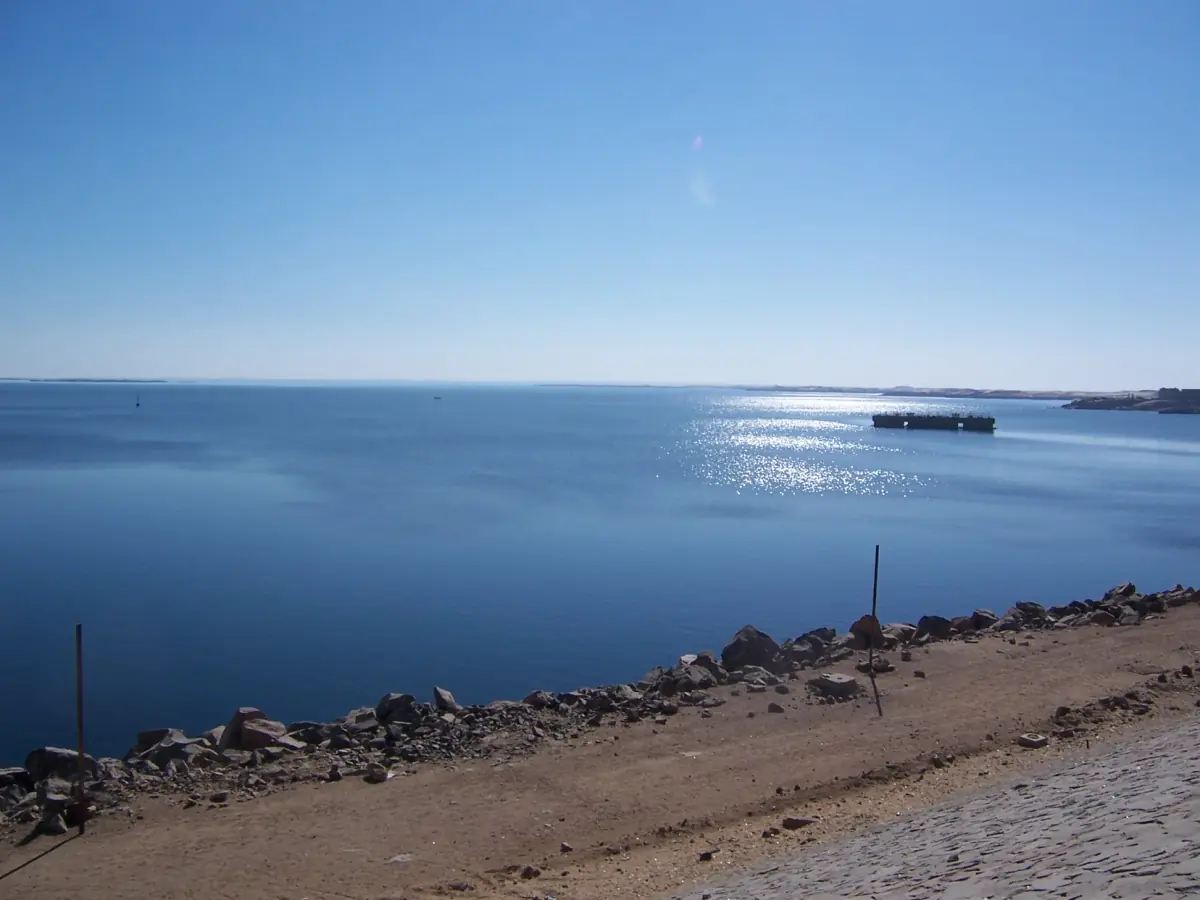
Philae tours from Aswan
Guided trips to the temple of Isis, with live prices and availability.
Where to look for the story in the temple
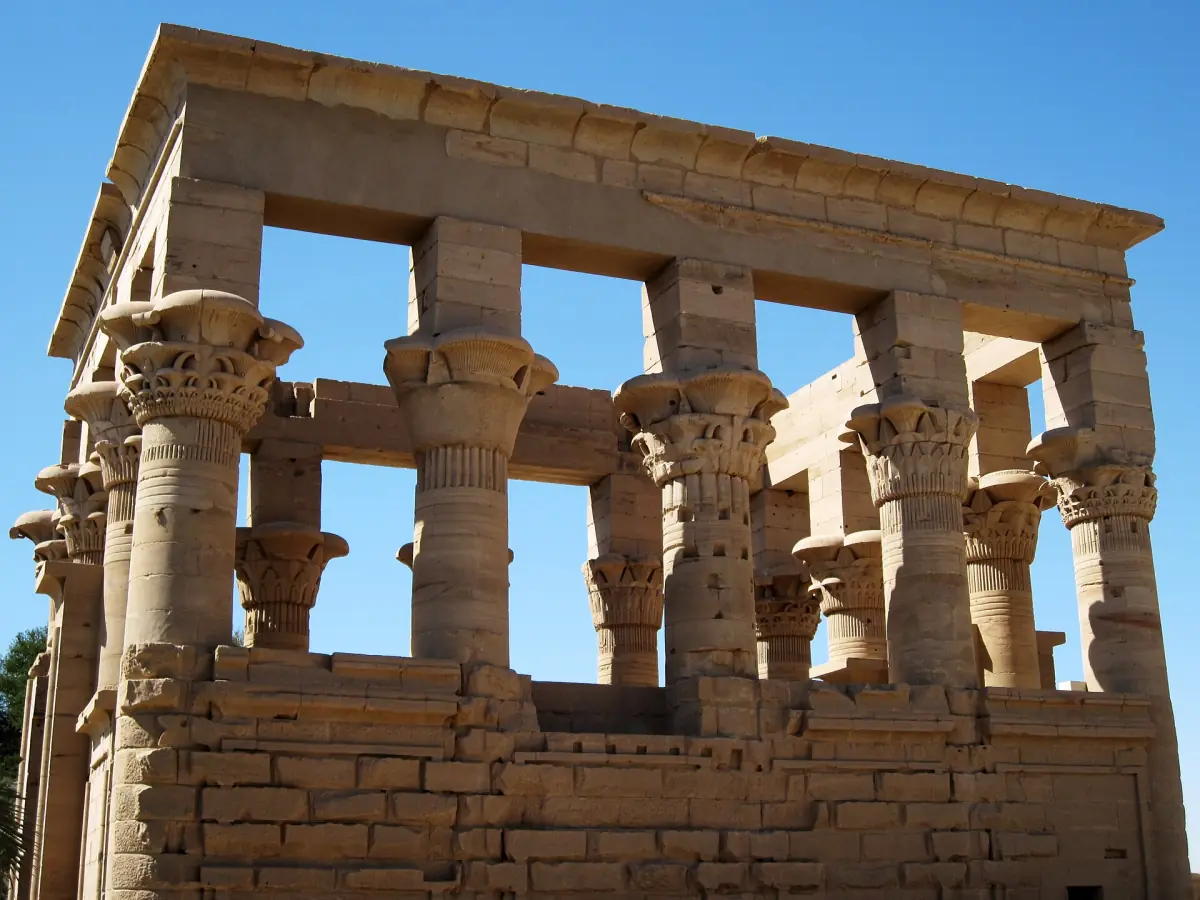
The temple complex has several parts: pylons, courts, colonnades, the birth house, the Hathor temple, Trajan's Kiosk and Hadrian's Gate. The myth runs through all of them, but a few places repay a slower look.
Reliefs of gods and offering scenes cover the pylons and the walls inside the temple. Take your time with them before you move on.
UNESCO singles out the depictions of the Osiris myth at Hadrian's Gate. If you only have time for one place to read the story, go there. Take care not to mix up three different places: the island of Philae, the island of Agilkia where the temple stands today, and the neighbouring island of Bigeh. The Agilkia page explains how the buildings got from one island to the other.
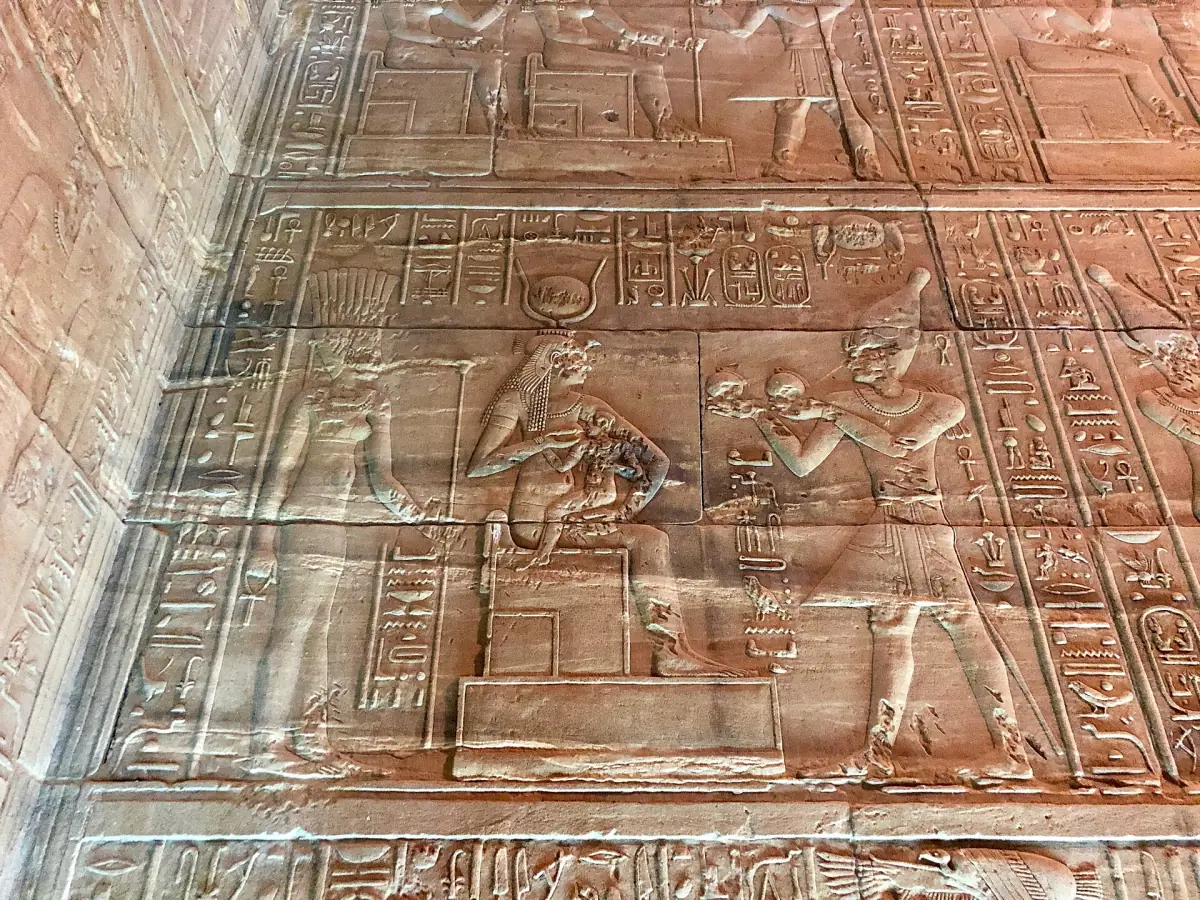
Hathor at Philae
Hathor is often shown with cow horns and a sun disc. Philae has a Hathor temple, built under Ptolemy VI and Augustus.
Telling Hathor from Isis on a relief can be hard. Divine features could pass from one goddess to another, so a horned crown alone does not separate the two. Look at the setting, the accompanying figures and any child on the lap before you decide.
A short list of what to check:
- Cow horns with a sun disc point to Hathor, but are not proof on their own.
- A figure nursing a child is usually Isis with Horus.
- Scenes with a king standing before a goddess show an offering, and the goddess may be Hathor.
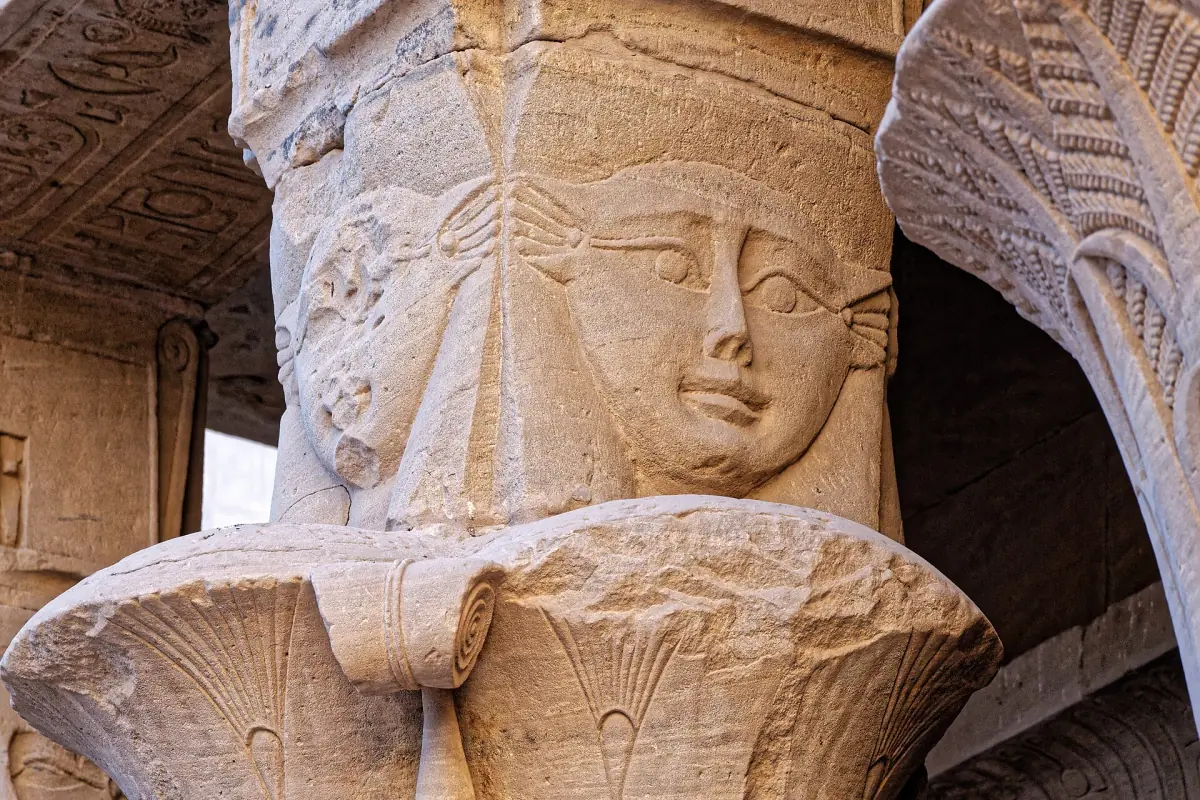
Bigeh, the island of the Osiris tomb
The sacred island next door.
Bigeh, also written Biga, lies beside Philae. In the myth it holds the tomb of Osiris. The ancient sanctuary there, the abaton, belonged to this belief, and processions of Isis went from Philae across to Bigeh.
Today Bigeh is not part of a regular visitor route. Plan your day around Philae itself, and treat Bigeh as part of the story, not as a stop on your ticket.
| Place | Role in the story | Visit |
|---|---|---|
| Philae (original island) | Cult centre of Isis | Flooded, no access |
| Agilkia | Today's site of the rebuilt temples | Boat from Marina Philae/Shellal |
| Bigeh | Island of the mythical Osiris tomb | No regular visitor route |
For most visitors, a good way to meet the myth is the temple itself, with a guide who can read the reliefs with you. A Philae tour from Aswan covers the boat as well.
When the cult ended
From temple to church.
The cult of Isis at Philae lasted for many centuries. Under the emperor Justinian, who ruled from 527 to 565 AD, the temple was closed and later converted into a church. No regular Isis worship takes place at Philae today. The history of Philae follows the later centuries in more detail.
Practical tips for reading the reliefs
Small things that make the visit better.
Go early
The temple opens at 07:00 and the last entry is at 15:00. Leave time for the interior reliefs instead of rushing through in the last hour.
Photos
Phone photography is free at Philae. Inside rooms, do not use flash. Drones need a permit from the Ministry of Defence.
Bring a guide or notes
Reliefs are easier to follow when someone names the figures. A guide, an audio tour or a printed summary of the myth does the job.
Check access
Not every side room or the roof is guaranteed to be open on a given day. Ask at the entrance when you arrive.
After the temple, the sound and light show is the evening way to see the island. Two more temples on the Nile between Aswan and Luxor are on the Edfu and Kom Ombo page.
Isis and Osiris at Philae: frequently asked questions
Why is Isis worshipped at Philae?
Philae has the temple of Isis. It was begun under Ptolemy II, and the birth house celebrates the birth of her son Horus.
Is the tomb of Osiris at Philae?
No. In the myth, the tomb of Osiris is on the neighbouring island of Bigeh. Philae is the island of Isis. Do not mix up Philae, Agilkia and Bigeh.
Can I visit Bigeh?
There is no regular visitor route to Bigeh today. It is an ancient sanctuary and part of the story, not a stop on a normal Philae ticket.
How do I tell Isis from Hathor on a relief?
Both can wear a horned crown with a sun disc, so the crown alone is not enough. Check the scene: a nursing mother with a child points to Isis, while Hathor is shown with cow horns and appears with her own temple at Philae.
What is a mammisi?
A birth house. The mammisi at Philae celebrates the birth of Horus.